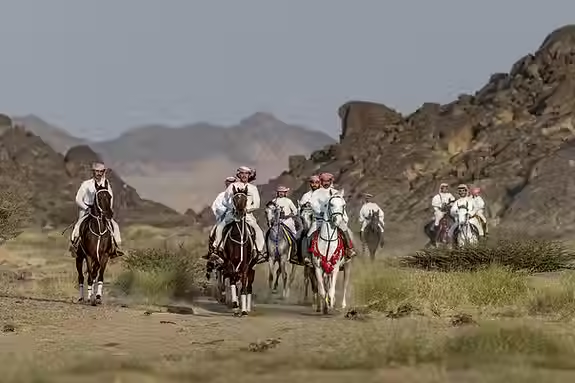
Where generosity is worship, clay is memory, and palm trees are the shadow of the ancestors.
In the southwest of the Kingdom, where dunes meet palm trees and the rabab (a type of stringed instrument) sings equestrian melodies, lies the Najran region, a land of authenticity, generosity, and mud-brick palaces that stand the test of time.
Najran is one of the oldest human settlements in the Arabian Peninsula, as it contains monuments and inscriptions dating back thousands of years and combines in its present a blend of southern heritage and urban modernity.
Its main cities are: Najran – Sharurah – Habuna – Badr Al Janoub – Yadmah – Thar – Khubash.
Najran is located in the southwest of the Kingdom and is bordered to the north and northeast by the Eastern Province, to the north by the Riyadh Province, to the west by the Asir Province, and to the south by the Saudi-Yemeni border.
Its geographical location makes it the gateway to the Arabian Peninsula from the south and a meeting point for historical caravans.
Najran is known as the city of mud, palm trees, and the rabab (a type of stringed instrument), where mud palaces still adorn old neighborhoods such as Aba Al-Saud neighborhood and Al-Ukhdood village, which dates back to the Sabaean and Himyarite civilizations.
In the evening, the sound of the rabab echoes among the gatherings, telling stories of heroism, pride, and generosity. The coffee pots are lit, and coffee is served to the tunes of poetry.
Customs and traditions
The whole sacrifice, a symbol of generosity, is offered to the guest without hesitation and is often cooked in an underground roasting pit.
Zamil dance: A spirited, masculine dance performed by men in tightly packed rows, carrying sticks and wearing turbans as a symbol of prestige and dignity.
The rabab accompanies national and social events with a sound that expresses pride and belonging.